
Di Peng
Member
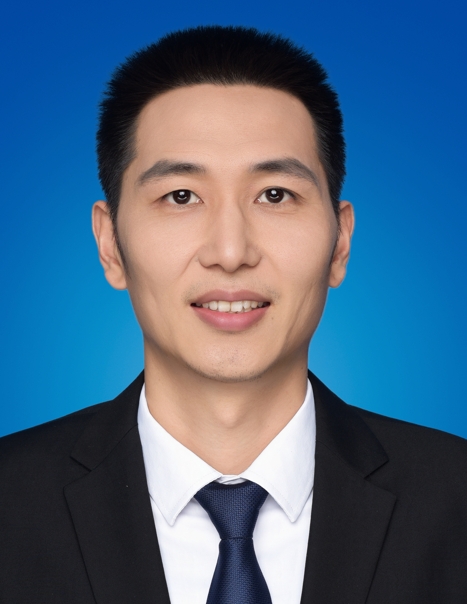
Dr. Peng conducted postdoctoral research at Huazhong University of Science and Technology from July 2017 to May 2022. Since June 2022, he has been an Associate Professor at Huazhong University of Science and Technology. Dr. Peng currently serves as a member of the Bioinformatics Special Committee of the China Computer Federation (CCF) and Secretary of the Artificial Intelligence Biology Branch of the Biophysical Society of China. Dr. Peng focuses on the computational dissection of metabolic homeostasis regulation, integrating proteomics to conduct systematic research. His work is characterized by three key directions: (1) Developing biology knowledge-driven computational models and chain-of-thought reasoning techniques to construct dynamic molecular network simulation methods, achieving precise prediction of nonlinear regulatory relationships (Nature Biomedical Engineering, 2026, co-corresponding; Briefings in Bioinformatics, 2025, co-corresponding; Genomics, Proteomics & Bioinformatics, 2025, co-corresponding); (2) Integrating phenotypic quantitative analysis with machine learning to discover key functional elements involved in metabolic remodeling, establishing precise identification strategies for core nodes (Nature Communications, 2024, co-first; Nucleic Acids Research, 2024, co-corresponding); (3) Employing network topology analysis and hierarchical learning strategies to dissect core molecular information flows maintaining metabolic homeostasis from omics data, revealing the spatiotemporal dependency mechanisms of metabolic regulation (Science Bulletin, 2024, first author; Autophagy, 2021a, co-corresponding; Autophagy, 2021b, first author). These studies provide theoretical support and methodological foundations for the prevention and control of metabolism-related diseases.
Selected publications:
1. Tang D#, Zhang C#, Zhang W#, Lu F, Xiao L, Huang X, Shao J, Liu D, Fu S, Zhao M, Zhang L, Jia D, Shen HM, Sun C, Chen G, Liu B, Peng D, Xue Y. A deep learning and large language hybrid workflow for omics interpretation. Nature Biomedical Engineering, 2026, doi: 10.1038/s41551-025-01576-5.
2. Peng D#, Zheng L#, Liu D#, Han C#, Wang X, Yang Y, Song L, Zhao M, Wei Y, Li J, Ye X, Wei Y, Feng Z, Huang X, Chen M, Gou Y, Xue Y, Zhang L. Large-language models facilitate discovery of the molecular signatures regulating sleep and activity. Nature Communications, 2024, 15(1): 3685.
3. Gou Y#, Liu D#, Chen M, Wei Y, Huang X, Han C, Feng Z, Zhang C, Lu T, Peng D, Xue Y*. GPS-SUMO 2.0: an updated online service for the prediction of SUMOylation sites and SUMO-interacting motifs. Nucleic Acids Research, 2024, 52(W1): W238-W247.
4. Peng D, Ruan C, Fu S, He C, Song J, Li H, Tu Y, Tang D, Yao L, Lin S, Shi Y, Zhang W, Zhou H, Zhu L, Ma C, Chang C, Ma J, Xie Z, Wang C, Xue Y. Atg9-centered multi-omics integration reveals new autophagy regulators in Saccharomyces cerevisiae. Autophagy, 2021, 17(12): 4453-4476.
5. Ruan C#, Wang C#, Gong X#, Zhang Y, Deng W, Zhou J, Huang D, Wang Z, Zhang Q, Guo A, Lu J, Gao J, Peng D, Xue Y*. An integrative multi-omics approach uncovers the regulatory role of CDK7 and CDK4 in autophagy activation induced by silica nanoparticles. Autophagy, 2021, 17(6): 1426-1447.