Matthias Mann Team’s Deep Visual Proteomics Training Course | AOHUPO & AOAPO & CNHUPO & π‑HuB 2025 Congress
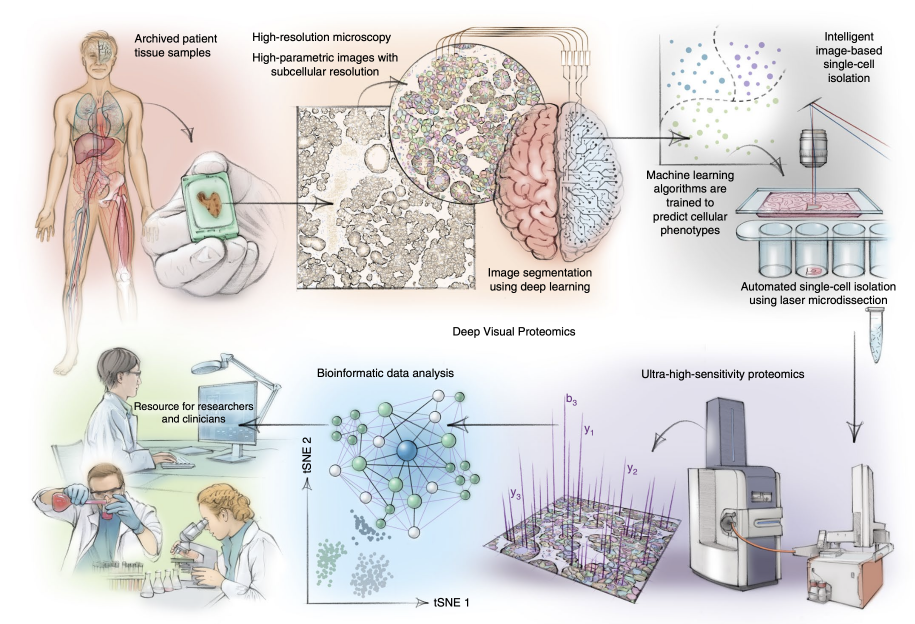
Deep Visual Proteomics (DVP) is a cutting-edge spatial proteomics technology developed by Mann’s groups in Copenhagen and Munich. It integrates high-resolution microscopy, AI-powered cell segmentation, laser microdissection (LMD), and high-sensitivity mass spectrometry. This approach enables in-depth proteomic profiling at single-cell and subcellular resolution (>5000 proteins), applicable to both FFPE and fresh frozen tissue sections, and closely linked with morphological pathology.
Since its first publication in 2022, DVP has been successfully applied to a broad spectrum of diseases, demonstrating its unique ability to reveal cell-type resolved molecular mechanisms, for example, toxic epidermal necrolysis, a lethal skin disease, alpha-1 antitrypsin deficiency liver disease, as well as studies in types of cancers. These cases showcase DVP’s versatility in characterizing tissue heterogeneity, immune microenvironment, and disease progression, providing valuable insights for precision medicine.
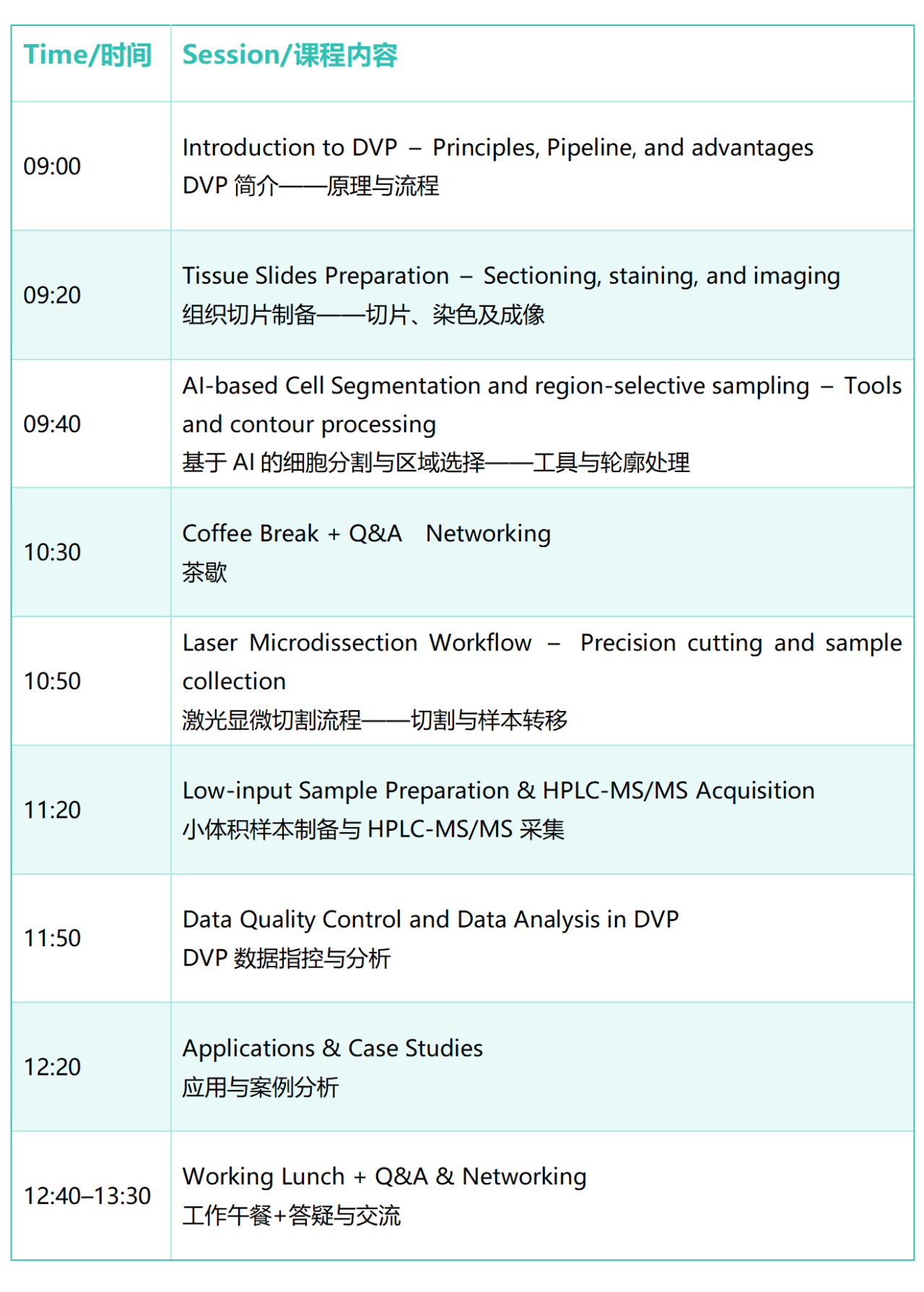
This workshop will cover the complete DVP workflow – from sample preparation to data analysis – and present real-world case studies demonstrating its applications in oncology and translational medicine. The program runs from 09:00 to 13:30, with a working lunch and Q&A.
2025 PEAKS Training Course | AOHUPO & AOAPO & CNHUPO & π‑HuB 2025 Congress Series
For the 2025 CNHUPO/AOHUPO Joint Conference in Guangzhou, the PEAKS two-day workshop will revolve around the theme “Navigating the Protein Universe: Toward New Biology and Precision Medicine”, exploring the dark proteome and peptidome in depth.
Over the past few years, large-scale proteomics efforts have allowed us to begin to understand phenotype at a protein level. In contrast to about 20,000 protein-coding genes in the human genome, there are over 100,000 different proteins and, as a result of alternative splicing, hundreds of thousands of protein isoforms (variants) in the human body. Proteoforms better describe protein-level biology and are more specific indicators of differentiation than their corresponding proteins. It comes the revolution in high-throughput proteomics with artificial intelligence (AI) models.
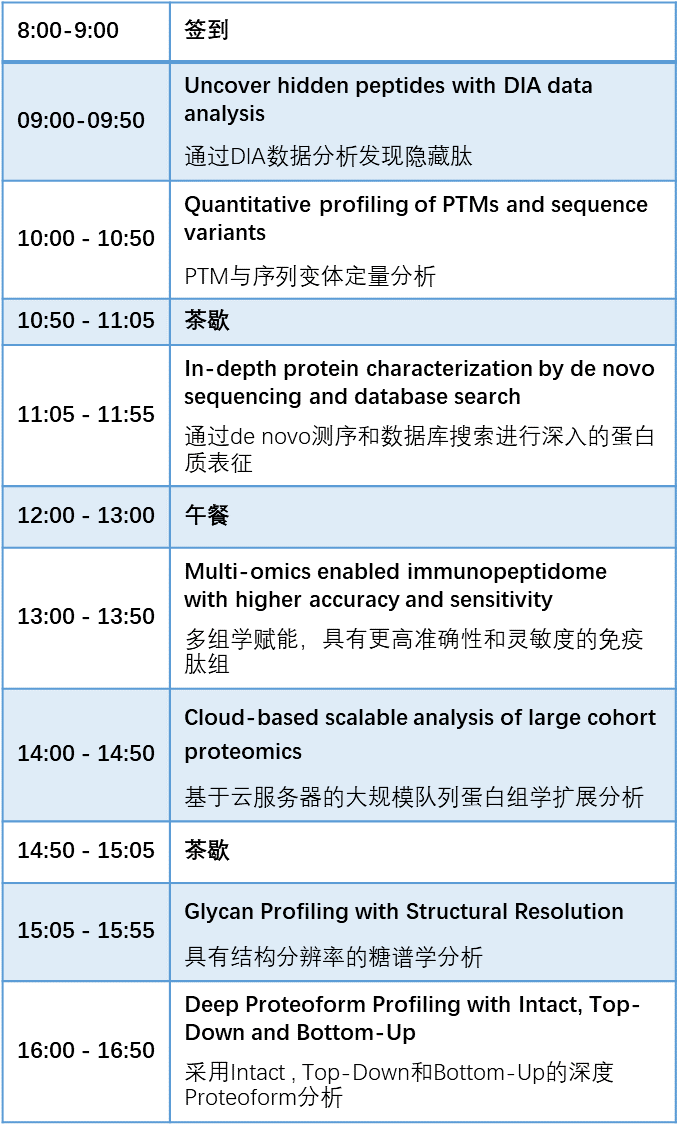
In this PEAKS Online training workshop, we are going to introduce AI models for high-throughput proteomics with deep coverage at proteoform level, by integrating alternative MS approaches with complementary database search and de novo sequencing data analysis. This training is highly suitable for both newcomers who have just entered the AI-empowered proteomics field and experienced researchers engaged in proteomics studies of large cohort samples.
Highlights of the training course:
1. Uncover dark peptidome/proteome from DIA data by a novel AI model to identify peptide sequence variants and novel peptides directly from complex DIA spectra while rigorously controlling the false discovery rate.
2. Learn the automation of data analysis of large-scale cohort project to obtain in-depth proteomics and proteogenomics insights for throughput of discovery and targeted mass-spectrometry-based technologies.
3. Demo how to integrate intact protein analysis, Top-Down and Bottom-Up approaches, to enable comprehensive proteoform characterization, including alternative splicing, modifications, and variants.
2025 AI for Protein Science Training Course | AOHUPO & AOAPO & CNHUPO & π‑HuB Congress
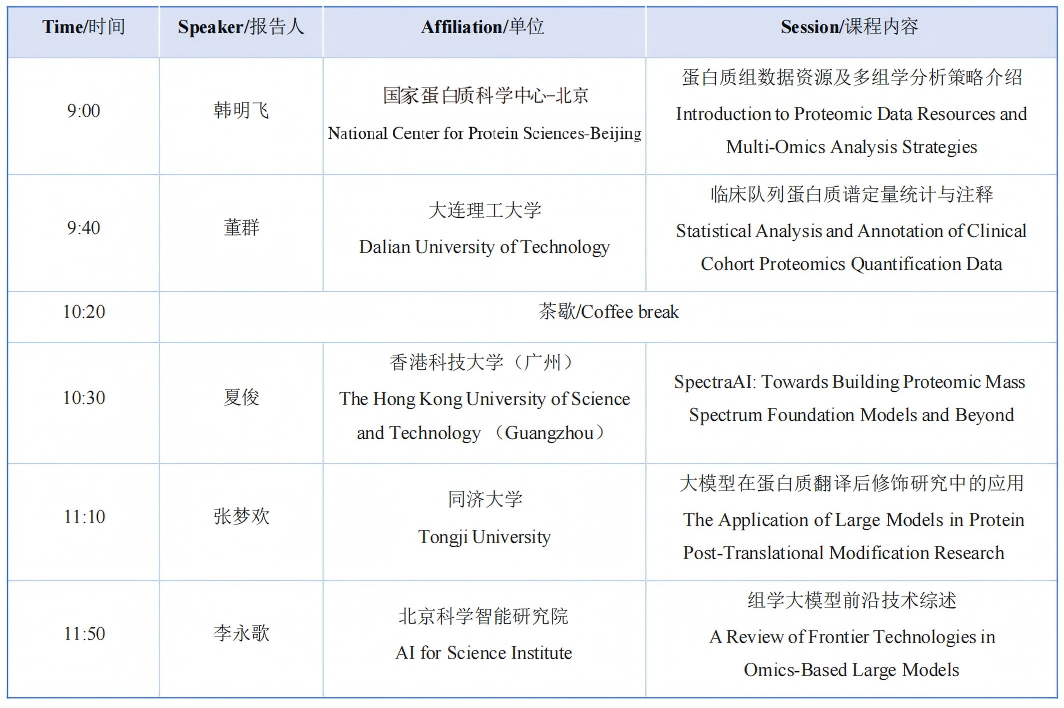
AI for Protein Science aims to systematically introduce how artificial intelligence is transforming various aspects of protein science research, with a focus on the in-depth application of AI technologies in the field of protein science.
Lecture topics include: Introduction to proteomic data resources and multi-omics analysis strategies, statistical analysis and annotation of clinical cohort proteomics quantification data, SpectraAI, the application of large models in protein post-translational modification research, and a review of frontier technologies in omics-based large models. The program runs from 9:00 to 12:30.
2025 MaxQuant Software Training Course | AOHUPO & AOAPO & CNHUPO & π‑HuB 2025 Congress Series
The MaxQuant workshop in Dr. Juergen Cox’s group provides hands-on training in the computational analysis of proteomics data generated by modern mass spectrometers. Since the first MaxQuant Summer School in 2009, this annual event has attracted hundreds of participants every year.
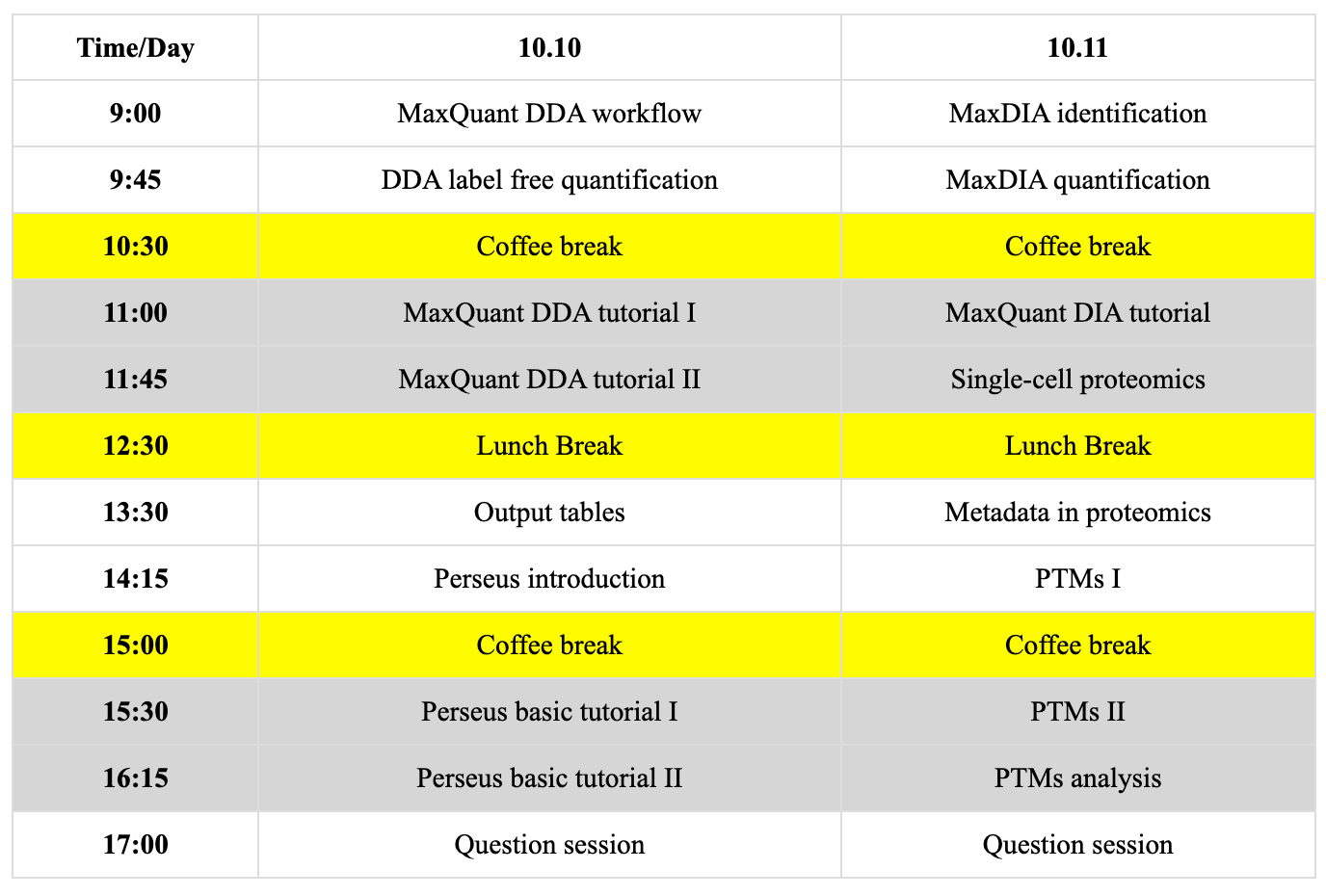
The two-day workshop in Guangzhou will consist of lectures that focus on theory and tutorials that focus on how to use the software with the dataset we provide. The developers of the software will show the DDA and DIA analysis with latest MaxQuant and the downstream analysis with Perseus. We’ll also introduce some advanced analysis such as PTMs, single cell proteomics, etc. There will also be a Q&A session at the end of the day to answer any questions not covered at the end of the presentation. The workshop is suitable for both beginners and experienced proteomics researchers.