
Gong Zhang
委员 Member
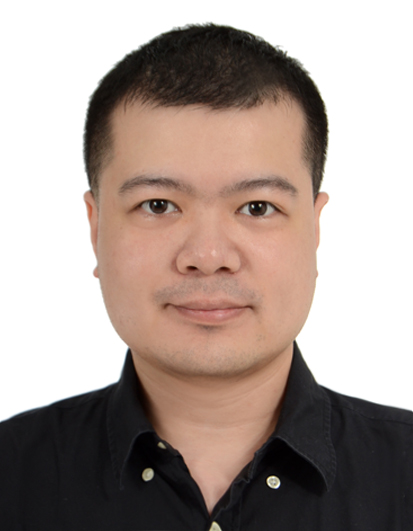
Dr. Zhang Gong, Researcher and Doctoral Supervisor at the School of Life Science and Technology, Jinan University. He received his Ph.D. from the University of Potsdam in Germany and was awarded the German Michelson-Preis Best Doctoral Student Award. As a founder in the field of translatomes, his achievements have been selected for inclusion in national unified textbooks. Currently, Dr. Zhang Gong serves as Co-Chair of the International Human Proteome Project C-HPP, the highest position held by a Chinese person in this large international collaborative project. Dr. Zhang Gong also serves as Associate Editor of the journal Frontiers in Oncology, member of the Chinese Molecular Systems Biology Committee, Standing Committee member of the Shenzhen CPPCC, recipient of the National Excellent Young Scientists Fund, National 863 Young Scientist, and recipient of the 2014 National Ten Thousand Talents Program “Outstanding Young Talent.” He discovered that translation rate regulation is one of the key factors determining protein folding, providing a disruptive update to the 1972 Nobel Prize in Chemistry theory “Anfinsen’s principle.” He was the first to achieve full-length mRNA sequencing in higher organism translation, revealing the key position of translational regulation in biological information transmission, establishing a quantitative relationship between mRNA and protein abundance in translation, and quantifying the central dogma. This established the new discipline of translatomes, with translatomic analysis serving as one of the core pillars of the International Human Proteome Project (HPP), listed by HUPO as the primary outstanding contribution in 2014. In 2014, as the sole representative of the Chinese Proteomics Society, he was invited by HUPO to give a special report on translatomes at the HUPO World Congress. He was the first to achieve full quantitative measurement of the tRNA repertoire, discovering the global translatomic regulatory mechanism by which bacteria can tolerate almost all antibiotics without relying on any gene mutations; he was the first to simultaneously measure translation initiation and translation rate. In the application field, he invented the rational redesign method of translation pause to optimize protein soluble expression efficiency, which can increase protein soluble expression yield by thousands of times without changing the amino acid sequence and expression conditions, providing new possibilities for biochemical engineering. He seeks reliable molecular markers for diseases of unknown etiology such as Kawasaki disease. Professor Zhang Gong has published more than 30 SCI papers in internationally renowned journals such as the Nature series, Nucleic Acids Research, and PLoS Genetics, and has obtained 2 national invention patents. In 2015, a high school student under his guidance published a research paper in Molecular Biosystems magazine and was featured as the cover article of that issue, which was the first research paper published by a Chinese high school student in a biological SCI journal. Professor Zhang Gong developed the FANSe series of ultra-high-precision large-scale sequencing sequence alignment algorithms, which are currently the most accurate algorithms, effectively solving the verifiability and repeatability problems of large-scale sequencing. As one of the founders, he established Shenzhen Chengqi Biotechnology Co., Ltd. Based on the FANSe series of algorithms, he established the world’s first highly practical gene sequencing analysis cloud platform, which has played a key role in multiple emergency clinical cases, providing the public with low-cost, high-precision health and clinical sequencing information services, and was invited to give a TED talk. He participated in the DNA identification work of the remains of the Chinese Expeditionary Force in Myanmar, and determined the whole genome sequence of the remains of the expeditionary force. This was the world’s first successful DNA identification of remains from tropical regions over 70 years old, and was widely interviewed and reported by Phoenix TV, Hunan TV, Guangdong TV, Guangzhou Daily and other media.
Research Direction: Biochemistry and Molecular Biology, Translatomes, Bioinformatics, Microbiology, Proteomics
1. Lu S, Zhang J, Lian XL, Sun L, Meng K, Chen Y, Sun Z, Yin X, Li Y, Zhao J, Wang T *, Zhang G *, He QY *A Hidden Human Proteome Encoded by “Non-Coding” Genes. Nucleic Acids Research (2019) 47 (15), 8111-8125.
2. Li D *, Liu B, Zheng H, Xiao X, Li Z, Luan E, Li W, Wang Y, Yang Y, Long Q, Song J, Zhang G * XY-Meta: A high-efficiency search engine for large scale metabolome annotation with accurate FDR estimation. Analytical Chemistry (2020) 92:8, 5701-5707.
3. Zhi-Biao Mai, Zhong-Hua Zhou, Qing-Yu He, Gong Zhang*. Highly Robust de Novo Full-Length Protein Sequencing. Analytical Chemistry (2022) 94, 8, 3467–3475.
4. Lu S, Wang T, Zhang G, He QY *. Understanding the proteome encoded by “non-coding RNAs”: New insights into human genome. Science China Life Sciences (2020) 1-10.
5. Zhou Z #, Yang Z #, Ou J #, Zhang H, Zhang Q *, Dong M *, Zhang G *. Temperature Dependence of the SARS-CoV-2 affinity to human ACE2 determines COVID-19 progression and clinical outcome. Computational and Structural Biotechnology Journal (2020) 19:161-167.