
Junyu Xu
Member
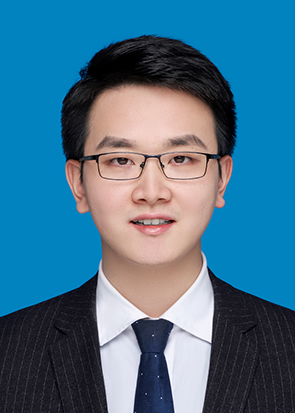
Dr. Xu earned his Ph.D. in Biochemistry and Molecular Biology from East China University of Science and Technology from September 2012 to June 2017. He currently serves as a Professor and Principal Investigator at the Shanghai Institute of Materia Medica, Chinese Academy of Sciences (CAS), and is a Youth Editorial Board Member of Genomics, Proteomics & Bioinformatics. Dr. Xu has been funded by the Excellent Young Scientists Fund of the National Natural Science Foundation of China (NSFC) (C2103), the Young Elite Scientists Sponsorship Program of the China Association for Science and Technology (CAST), and the Shanghai Rising-Star Program of the Shanghai Municipal Science and Technology Commission. Adopting a multi-dimensional omics integration strategy with a microbe–host model system, Dr. Xu focuses on the characterization of substrates and functional dissection of protein post-translational modifications, aiming to reveal the molecular regulatory mechanisms of protein modifications, explore potential intervention strategies, and identify novel biomarkers and drug targets. To date, he has published nearly 40 papers as first or corresponding author (including co-authorship) in leading international journals including Cell, Nature Cancer, Science Translational Medicine, Cell Metabolism, and Cell Chemical Biology. He has been selected as one of the inaugural Rising Stars in Proteomics and Metabolomics by the Journal of Proteome Research, nominated as an awardee of the inaugural Shanghai Science and Technology Young Talents “35 Leading Program,” and received the 2021 Shanghai Science and Technology System “Youth May Fourth Medal (Individual)” and the Sanofi–Shanghai Institutes for Biological Sciences (SIBS) Excellent Young Talent Award.
Selected publications:
1. Xu JY#, Zhang CC#, Wang X#, Zhai LH#, Ma YM#, Mao YS, Qian K, Sun CQ, Liu ZW, Jiang SW, Wang MH, Feng L, Zhao L, Liu P, Wang B, Zhao X, Xie H, Yang XY, Zhao LY, Chang YF, Jia JY, Wang XJ, Zhang YM, Wang YR, Yang YK, Wu ZX, Yang LH, Liu B, Zhao T, Ren SG, Sun AH, Zhao Y, Ying WT, Wang F, Wang GS, Zhang Y, Cheng SJ, Qin J, Qian XH, Wang Y*, Li J*, He FC*, Xiao T*, Tan M*. (2020) Integrative proteomic characterization of human lung adenocarcinoma. Cell. 182: 245-261, e17.
2. Dong B#, Xu JY#*, Huang Y#, Guo J#, Dong Q#, Wang Y#, Li N, Liu Q, Zhang M, Pan Q, Wang H, Jiang J, Chen B, Shen D, Ma Y, Zhai L, Zhang J, Li J*, Xue W*, Tan M*, Qin J*. (2024) Integrative proteogenomic profiling of high-risk prostate cancer samples from Chinese patients indicates metabolic vulnerabilities and diagnostic biomarkers. Nat Cancer. 5: 1427-1447.
3. Lu YT#, Xu JY#, Li YF#, Wang RR#, Dai CQ#, Zhang BQ, Zhang XW, Xu L, Tao YH, Han M, Guo R, Wu QQ, Wu LS*, Meng ZX*, Tan M*, Li JY* (2024). DRAK2 suppresses autophagy by phosphorylating ULK1 at Ser56 to diminish pancreatic β cell function upon overnutrition. Sci Transl Med. 16: eade8647.
4. Liu Z, Jiang S, Hao B, Xie S, Liu Y, Huang Y, Xu H, Luo C, Huang M, Tan M, Xu JY* (2024). A proteomic landscape of pharmacologic perturbations for functional relevance. J Pharm Anal. 14: 128-139.
5. Zhou C#, Wang J#, Wei S, Hu Z, Liu X, Tian D, Zhu W, Tan M*, Xu JY* (2025). Multiomic Analysis of Candida albicans Adaptation during Commensal Coexistence with Staphylococcus aureus. ACS Chem Biol. 2025. Doi: 10.1021 / acschembio. 5c00681.