
Jing Wei
Member
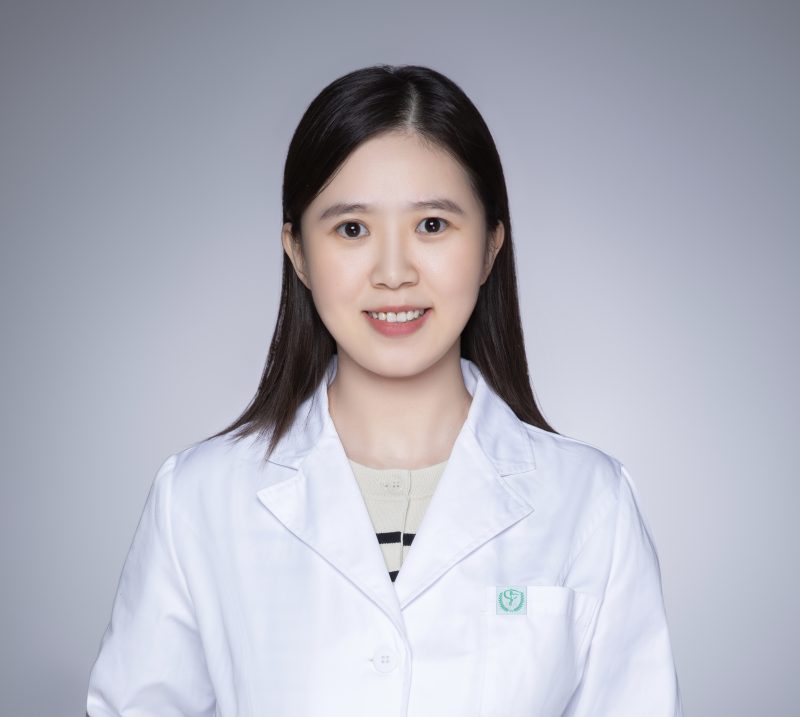
Dr. Wei earned her Ph.D. in Biochemistry and Molecular Biology from the College of Life Sciences, Beijing Normal University, from September 2016 to June 2019. She conducted postdoctoral research at the College of Life Sciences, Beijing Normal University, from October 2019 to October 2021, and has been an Assistant Research Fellow at Beijing Children’s Hospital, Capital Medical University, since November 2021. Dr. Wei’s research focuses on diagnostic biomarkers and pathogenic mechanisms of major pediatric diseases. She currently oversees the operation of the high-resolution mass spectrometry platform and related multi-omics research at Beijing Children’s Hospital. In recent years, she has conducted proteomics research on major pediatric diseases, with a particular focus on central nervous system infections in children, systematically carrying out proteomic studies for early diagnosis, complication warning, and severe outcome prediction, providing potential biomarkers and intervention targets for such diseases. She has led the establishment of organoid biobanks for pediatric solid tumors including thyroid carcinoma, rhabdoid tumors, and gliomas, providing multi-omics model support for precision targeted therapy. As a core member of the “China Urine Project,” she has been deeply involved in automated sample preparation and multi-platform data analysis, laying the foundation for the standardized application of clinical fluid proteomics. Dr. Wei currently leads one Young Scientists Fund project of the National Natural Science Foundation of China and participates in four national and provincial-level projects including the National Key Research and Development Program. She has published over twenty papers in journals including Expert Review of Proteomics, Clinical Proteomics, Journal of Proteomics, and Journal of Neurochemistry, including 11 as first author in SCI-indexed journals, and holds one invention patent. Her research has been recognized internationally, receiving the HUPO and USHUPO Travel Awards twice with invitations for oral presentations.
Selected publications:
1. Wei J#, Zhu L#, Jian B, Yu Y, Hu B, Guo L, Hu H, Dou Z, Liu L, Liu G*, Guo P*. 2025. Proteomic profiling of cerebrospinal fluid uncovers distinctive pathophysiological changes and potential biomarkers in pediatric tubercular meningitis. Frontiers in Cellular and Infection Microbiology. 2025 Oct;15. 10.3389/fcimb.2025.1662783.
2. Wei J#, Jian B#, Zhu L, Guo L, Du J, Yu Y, Zhang X, Wu Y, Sun W, Guo Z, Zhu K, Guo P*, Jia L*, Liu G*. Proteomic profiling of cerebrospinal fluid reveals pathophysiology changes and diversity of treatment response in pediatric Streptococcus pneumoniae meningitis. Expert Review of Proteomics. 2025 Sep;22(9):345-361.
3. Jian B#, Wei J#, Zhu L, Guo L, Hu B, Xie Y, Chen T, Liu B, Li W, Du J, Liu L, Zhang X, Sun W, Guo Z, Yao K, Jia L*, Liu G*. Cerebrospinal fluid quantitative proteomic reveals potential mechanisms and biomarker candidates of children with bacterial meningitis complicated by neurological complications. Clinical Proteomics. 2025 Aug 11;22(1):26.
4. Su Y#, Wei J#, Sun S#, Jia L*, Li Q*. Serum Proteome Profiling Implicates Dysregulation of Immune Response and Inflammatory Mechanisms in Methylmalonic Acidemia With Brain Injury. JOURNAL OF NEUROCHEMISTRY. 2025 Oct;169(10):e70242.
5. Wei J#, Huan Y#, Heng Z, Zhao C, Jia L, Yu Y, Gao Y*. Dynamic urine proteome changes in a rat model of simvastatin-induced skeletal muscle injury. Journal of Proteomics. 2022 Mar 15;254:104477.